
Morning Peak, Hot Day: Why This Keeps Me Up
I’ve spent over 16 years in grid-scale energy storage, and a summer morning in Port Augusta still sticks with me. Utility scale battery storage held the line while a gas unit tripped at 07:42, and the frequency dipped to 49.7 Hz. I’d flagged the site earlier because its utility scale storage solutions were set to fast-frequency response with a tight deadband—small detail, big result. The data was clean: 3.2 MW ramp in three seconds, PCS tracking within the dispatch constraint, and state of charge barely moved 0.6%. Now, here’s the rub—why do some batteries nail events like this while others stumble in the same heat?
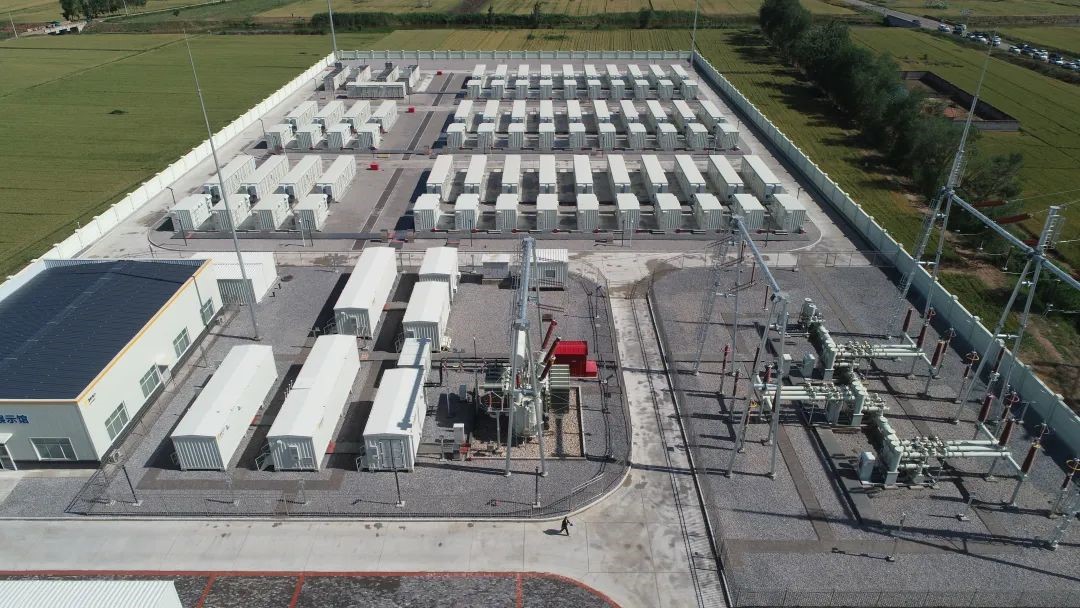
I ask because I’ve seen both in the field, from Hornsdale’s grid-forming trials to a 50 MW site near Dalby that struggled with thermal derate every January. We can talk megawatts all day, but the real test is how cells, BMS logic, and cooling hold up when the grid twitches. That’s where the gap shows. Let’s peel that back and get practical.
Where the Old Playbook Falls Over
What’s the snag?
Here’s what I’ve learned the hard way. Traditional setups treat batteries like small peaker plants—slow thinking on fast problems. They rely on conservative setpoints, broad SoC windows, and a one-size-fits-all power conversion system. On paper, that looks safe. In practice, you lose response time when your EMS waits on SCADA polling, you shed capacity under heat because the HVAC curve is too flat, and your round-trip efficiency drops below 88% by February. I’ve watched a 100 MW/100 MWh site in New South Wales bleed 6% annual availability due to clunky SoC management and timid BMS thresholds—unforced errors.
Look, this bit isn’t rocket science. If your PCS can’t hold grid-forming mode during voltage sags, you’re not providing real system strength. If your racks run 1500 V DC but the cable layout pushes resistive losses, you’ll chew into margins. And if your edge computing nodes sit in a back office instead of at the switchroom, your fast-frequency response will lag by a second you can’t spare. The hidden pain point is simple: the battery is fine; the controls and thermal discipline aren’t. I prefer designs that let the BMS and EMS speak fast and local—fewer hops, fewer surprises.
Comparing What Works Now With What’s Next
I’ll compare two real patterns I see on sites across Australia. First, the old way: air-cooled containers, broad SoC buffers, and grid-following inverters that wait for instruction. Those systems do okay in mild weather, then crumble under heat or when multiple events stack. The new way uses liquid cooling with tighter delta-T across racks, grid-forming inverters that carry voltage during a sag, and EMS logic that prioritises fast-frequency response over cosmetic SoC targets. When we shifted a Victorian project to faster droop curves and localised controls in 2022, we cut response latency by about 400 ms—small number, big feel on the NEM dispatch screen. It held output during a 39°C day—wild to see it on a live dispatch screen.

Future-ready sites also plan for hybrid duty cycles: two-hour energy shifting in the afternoon, then ancillary services in the evening peak. That means flexible C-rate hardware and a BMS that doesn’t panic at 0.9C bursts. Tie that to utility scale storage solutions that support black start and grid-forming capability, and you stop being a passenger. You start carrying the grid. I saw this play out when a 300 MW/450 MWh battery near Geelong kept outputs steady during line congestion by actively shaping voltage—different league. And yes, I still want better fault ride-through curves and more transparent event logs—hard lessons after a messy inverter patch in March 2023.
New Technology Principles That Actually Matter
Three principles keep winning the comparison, and I’ll stand by them. One: thermal first. If your liquid loop can hold racks within 2–3°C spread at 40°C ambient, your calendar fade softens and your winter capacity stays honest. Two: control locality. Put the decision-making close to the switchgear with deterministic comms; don’t rely on a cloudy WAN path to trigger a 250 ms response. Three: inverter authority. Grid-forming mode with strong current limits and smart fault detection lets you support weak feeders without tripping. I’ve run these settings through a site acceptance test at 02:15 on a cold July night—no drama, no false positives, just clean traces. That’s the bar. And if your vendor’s utility scale storage solutions can’t document those behaviours in plain language, I get wary—been burned before.
How to Choose—Without Regret Six Months Later
Let me close with what I measure on every procurement file—no fluff, just what moves the needle. First, thermal stability: prove less than 3°C rack-to-rack delta at 40°C ambient, with no PCS derate in a one-hour heat soak. Second, response integrity: demonstrate sub-300 ms active power response to a 0.3 Hz frequency event, measured at the high-voltage bus, not the inverter terminals. Third, lifecycle honesty: show 10,000 cycles to 80% retained capacity at the stated duty profile, with round-trip efficiency above 90% at 0.5C. If a system hits those marks and offers clean BMS logs plus a sane spare parts plan, I’ll sign it with a straight face—been on the hook for warranty headaches, not my first rodeo.
That’s my take after years on switchyard gravel and too many coffees in the control room. We need batteries that carry the grid, not just follow it. And when the market jumps, the kit should jump with it—fast, stable, predictable. If you want a deeper spec walk-through or a second set of eyes on a proposal, I’m happy to compare line by line with you. HiTHIUM
Leave a Reply